Ocean "Acidification" -- Another Fake Scare That Won't Go Away

Ocean "Acidification" -- Another Fake Scare That Won't Go Away
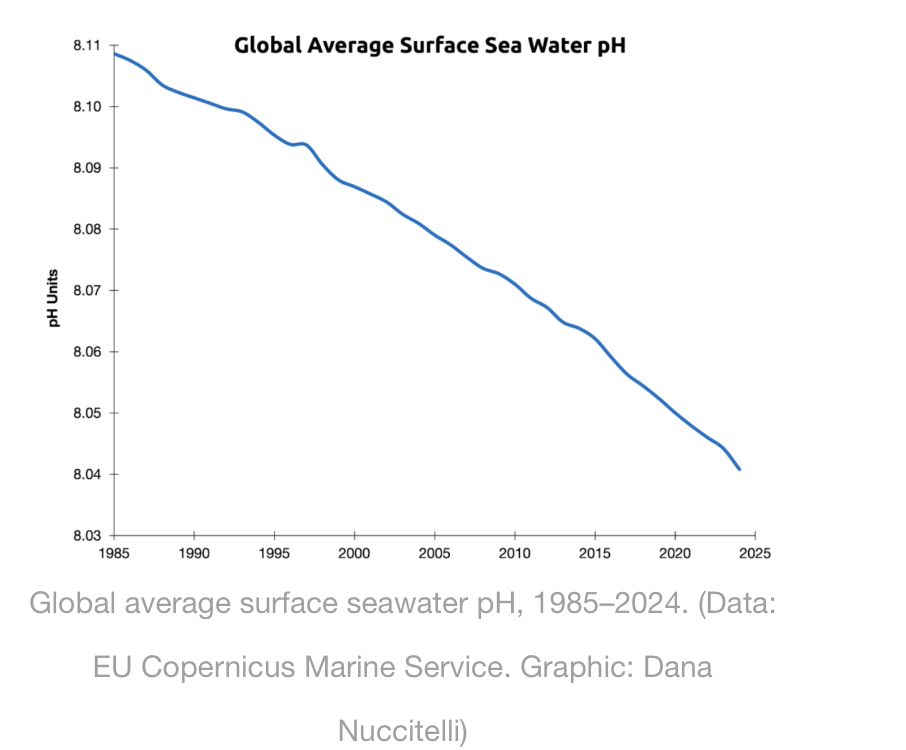
  • Ocean “acidification” is a somewhat unique branch of the overarching climate scare. It differs from other branches of the big scare in that it does not depend on atmospheric heating as the driver of the supposed scary consequences. Instead, with ocean “acidification,” the idea is that increased CO2 in the atmosphere (from the burning of fossil fuels) leads to increased CO2 dissolved in the oceans, which leads to lower pH of ocean water, which then becomes the driver of the alleged scary consequences.

  • Thus, ocean “acidification” can theoretically work as a scare even if the atmosphere fails to heat with increasing CO2 content to the extent predicted by advocates’ climate models.

  • But the ocean “acidification” claim has its own frailties. For advocates of apocalyse, it is a problem that the ocean is (somewhat) alkaline, rather than acidic, and that the change in ocean pH from even large increases in CO2 in the atmosphere is small. Some might even call the change in ocean pH “slight.” And the pH change, even in worst-case scenarios, is not nearly enough to bring it down to the level of neutrality, let alone acidity. The last point is the reason that I have been putting the term “acidification” in quotes.

  • So, how can advocates make ocean “acidification” into something sufficiently scary to motivate lots of people to hate or fear fossil fuels?

Read More

At The Heartland Climate Conference: "What Is The Proof?", Earth's Energy Imbalance Edition

At The Heartland Climate Conference: "What Is The Proof?", Earth's Energy Imbalance Edition
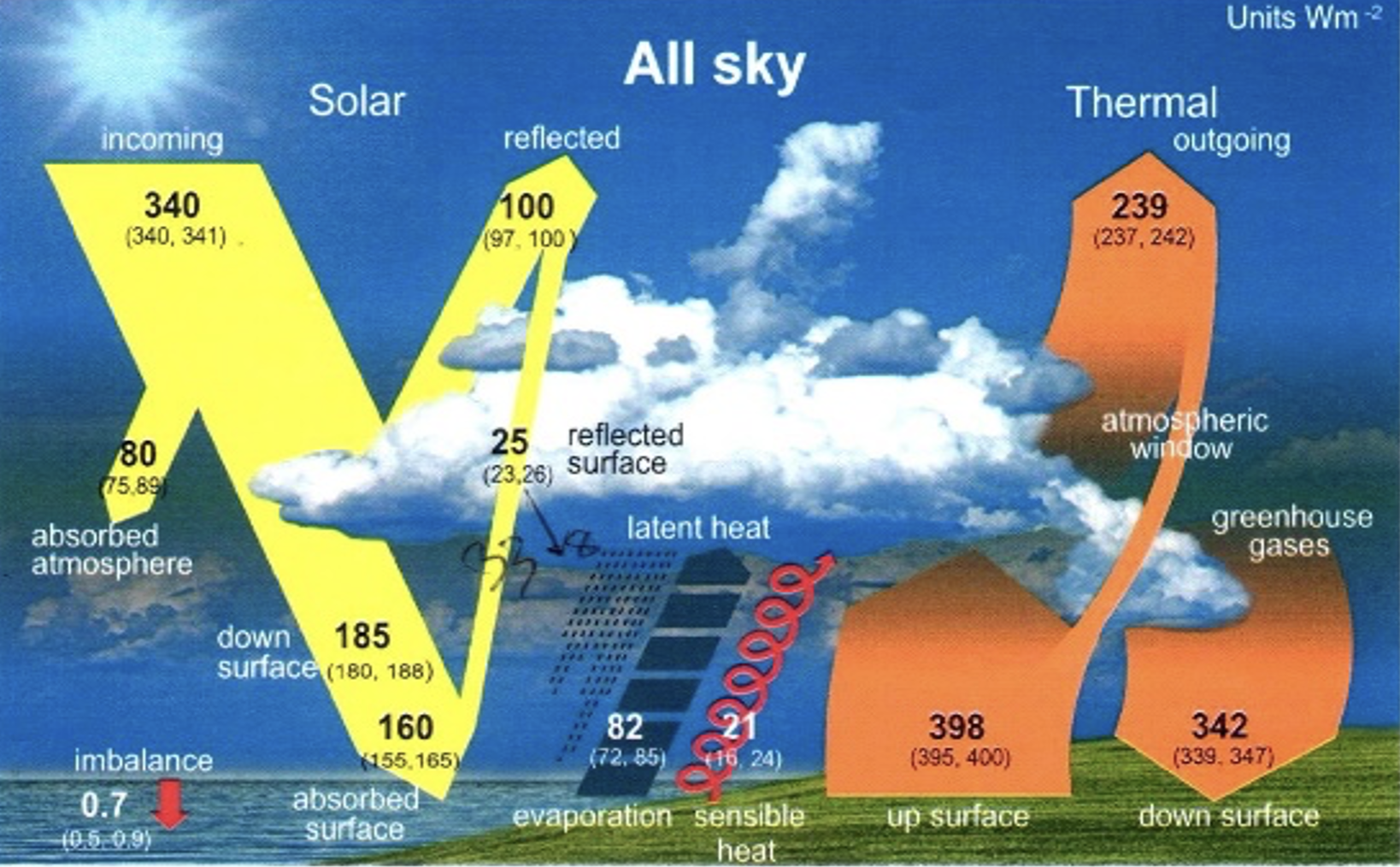
  • In his April 9 address to the Heartland Climate Conference, physicist John Clauser devoted the first quarter of his time to the issue of extreme weather events, and the remainder to something called the Earth’s Energy Imbalance, or EEI. On April 10, I summarized the portion of the presentation relating to extreme weather events in my prior post here. Today I will discuss Clauser’s presentation on EEI.

  • Before hearing Clauser’s presentation, I had heard of the EEI metric, but I had not studied it in depth. Nor had I realized the extent to which the IPCC and the climate cabal have embraced this metric as providing the preferred proof of impending dangerous global warming.

  • The metric that has previously been most used as the supposed proof of dangerous atmospheric warming generally goes by the name Global Average Surface Temperature, or GAST.

Read More

At The Heartland Climate Conference: "What Is The Proof?", Extreme Weather Events Edition

At The Heartland Climate Conference: "What Is The Proof?", Extreme Weather Events Edition
  • I spent the past couple of days attending the International Conference on Climate Change, put on by the Heartland Institute in Washington. There was a good deal of material that will be of interest to readers.

  • A major issue addressed by multiple presenters goes under the heading “What is the proof?”, and in particular what is the proof that there is some kind of climate “crisis” coming our way. You will not be surprised to learn that for most every claim of the climate cabal, the proof is lacking.

  • The most interesting presentation on this subject came from John Clauser.

  • Clauser titled his talk “Global warming, climate change, and scientific consensus have not been proven. There is no proven climate crisis.”

Read More

Mann v. Steyn: Finally Ready For Appeal?

  • Way back in 2012, climate “scientist” Michael Mann, then at Penn State University, sued four defendants for defamation. The four were commentators Mark Steyn and Rand Simberg, who had written blog posts about Mann, and National Review and the Competitive Enterprise Institute, entities which had respectively hosted the Steyn and Simberg posts.

  • The occasion for the Steyn and Simberg posts was that independent investigator Louis Freeh had issued a Report that had castigated Penn State President Graham Spanier for having whitewashed the conduct of the university’s assistant football coach, Jerry Sandusky, in a sex abuse scandal. Steyn and Simberg had compared Spanier’s exoneration of Sandusky to his exoneration two years previously of the university’s star climate science professor, Mann, after the so-called “ClimateGate” emails had shown Mann deeply involved in data manipulation schemes to support the narrative of climate apocalypse.

  • Here we are now in 2026, more than 13 years later. The Mann v. Steyn case has gone through a truly incredible procedural history, including multiple motions to dismiss, two appeals to the D.C. Court of Appeals (different from the D.C. Circuit Court of Appeals), a certiorari petition to the Supreme Court, a jury trial after remand (in 2024), and a bevy of post-trial motions. I have previously had numerous posts covering this case, including the trial and subsequent developments. My most recent post was this one from March 2025, covering the trial judge’s decisions on most of the post-trial motions.

  • A few days ago, on January 22, the trial judge finally issued a decision that appears to resolve the last of the post-trial motions.

Read More

Comment Filed In Support Of EPA's Repeal Of The 2009 Endangerment Finding

  • Yesterday, along with two excellent colleagues, I submitted a Comment to EPA on the subject of the proposed and pending repeal of the so-called Endangerment Finding of 2009.

  • The Endangerment Finding (EF) is the absurd regulatory action by which the Obama-era EPA purported to find that the trace gas carbon dioxide (CO2) constitutes a “danger” to human health and welfare as it accumulates in the atmosphere from the current level of about 0.04%, to perhaps 0.05% or maybe even (the horror!) 0.06% by some time later this century.

  • The EF is then the basis for all the subsequent regulatory initiatives by the Obama and Biden administrations to regulate and suppress the production and use of hydrocarbon fuels. These initiatives have included things like rules to force the closure of all coal and natural gas power plants by some time in the 2030s; mileage rules for automobiles that would ratchet up over time until no gasoline-powered car could comply (also by some time in the 2030s); restrictions on oil and gas leases on federal lands; blocking the construction of pipelines; and even regulations that have made it so that dishwashers and washing machines don’t work very well any more.

  • Here is a link to our Comment.

Read More

New York Times On Climate Change: Two Candidates For Quote Of The Day

  • Over at the New York Times today, print edition, there is a big front page article documenting how their side is losing the latest battle in the climate wars. The headline is “U.S. Embraces Climate Denial In Science Cuts.” (online headline somewhat different). Also in the Times today (online version) is a feature called “Quote of the Day.” Today’s “quote of the day,” as selected by the Times, is taken from the “climate denial” article just previously linked. Here it is:

  • “It’s as if we’re in the Dark Ages.”

  • This quote is attributed to one Rachel Cleetus, identified as senior policy director with the climate and energy program at the Union of Concerned Scientists.

  • But then, if you take some time to read the article, you come to what I would propose as another excellent candidate for quote of the day. It’s from Brooke Rollins, recently confirmed as the new Secretary of Agriculture in the Trump administration. Here it is:

  • “We’re not doing that climate change, you know, crud, anymore.”

Read More