Capitalist Oppressors In Action: Some History Of A New York Office Building
/The socialist creed preaches a narrative of Capitalist Oppressors, often large corporations, who somehow collaborate and conspire to keep the oppressed masses down. I was reminded of that narrative when I recently saw a post at the website called New York YIMBY (“Yes In My Back Yard”), that provided some history of a certain office building in midtown Manhattan, 1301 Avenue of the Americas. The post, by Max Gillespie on September 7, is titled “1301 Avenue Of The Americas Fully Leased In Midtown, Manhattan.” It happens that I am very familiar with this building, since I worked right across the street from it for about 18 years.
The history of 1301 Avenue of the Americas provides a small look into the constant change and churn that are endemic among corporations in the real world.
Here from YIMBY’s post is a picture of 1301 Avenue of the Americas, credited to one of the building’s former owners, the Paramount Group.
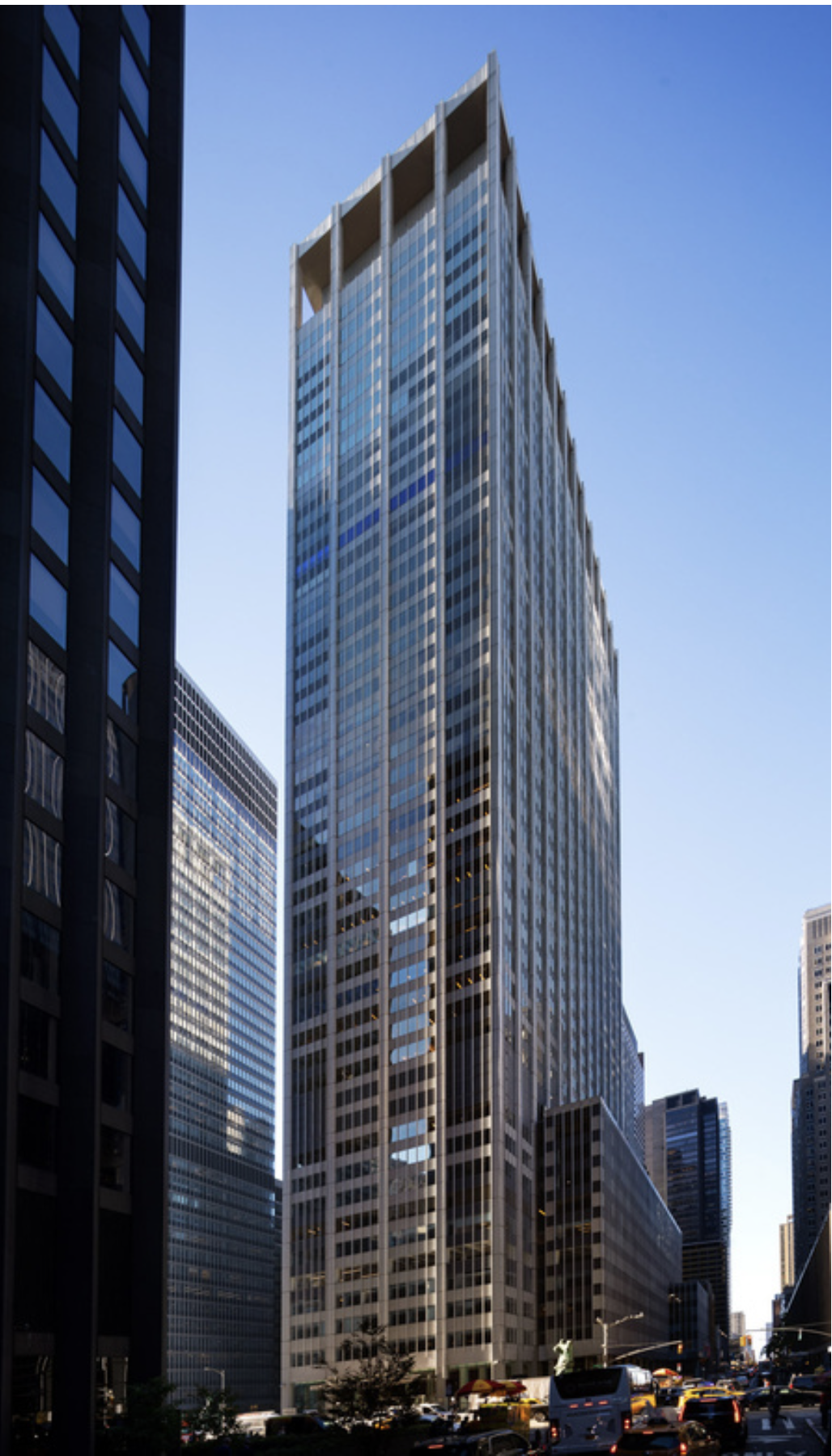
This building, built in 1964, is not particularly famous or notable in the forest of high-rises that characterizes midtown Manhattan. However, as you can see, the building is quite large — 609 feet high, 45 stories, and 1.8 million square feet. Over the years it has been home to a number of large corporate tenants. And yet, one by one these tenants have downsized, shrunk their footprint or even vacated the building and gone out of business altogether. Nevertheless, YIMBY reports that, with a recent renewal and expansion by a Cleveland-based bank called KeyBank, the building is now fully occupied:
KeyBank has renewed and expanded its lease at 1301 Avenue of the Americas . . . . The Cleveland-based bank added 15,292 square feet under a 15-year renewal, bringing its total footprint to 112,924 square feet across the entire 35th through 37th floors and portions of the 28th and 38th floors. With the deal, the tower is fully leased.
But consider some of the prior tenants. In its early days, the main tenant was a discount department store chain called J.C. Penney. Do you remember those stores? When 1301 Avenue of the Americas was built, J.C. Penney was riding high. In the 1960s and 70s, “J.C. Penney occupied more than 800,000 square feet across 33 floors as the anchor tenant. . . .,” and the building was known as the J.C. Penney building. In 1977, J.C. Penney then “purchased the property for $55 million.” That was just after J.C. Penney reached its peak with 2,083 stores in 1973. But during the late 70s and 80s, J.C. Penney had already begun to decline. According to the YIMBY piece, J.C. Penney “relocat[ed] its headquarters to Dallas in 1988.” Since then J.C. Penney has continued to shrink. In 2020, the company went through a bankruptcy and restructuring. According to its website, it is down to about 600+ stores today.
But other companies came along to occupy the space vacated by J.C. Penney. Around 1990, the large French bank known as Credit Lyonnais took a big bloc of space, and the building was renamed the Credit Lyonnais building. Credit Lyonnais, by the way, was owned at the time by the French state. The bank’s expansion at 1301 Avenue of the Americas was part of a massive world-wide growth push for Credit Lyonnais. Unfortunately, it all quickly came apart. By 1999, an article in Forbes characterized Credit Lyonnais as “the dirtiest bank in the world,” and its trajectory over the course of the 90s as “by far the biggest banking debacle in history.” According to Forbes:
[O]n a Sunday morning in 1996, . . . [a huge fire began, and] raged for 16 hours, destroying most of [Credit Lyonnais]'s headquarters, the largest nongovernment building in Paris, one that dominated an entire block on the Boulevard des Italiens near the old Opera. . . . It's a striking and fitting image of what Credit Lyonnais has become. Once a force in global finance, the bank is little more than half its former size, having been looted by criminals, racked by scandal and decimated by the loss of at least $20 billion in reckless and corrupt investments.
Forbes described the debacle as “an object lesson in what can go wrong in a government-owned commercial enterprise without accountability.” By 2003 the French government had arranged the merger of Credit Lyonnais into its former rival, Credit Agricole. The footprint of the bank at 1301 Avenue of the Americas shrank dramatically.
But meanwhile, a big law firm known as Dewey Ballantine had also moved to 1301 Avenue of the Americas in 1990. In 2007 Dewey Ballantine merged with another large New York firm called LeBoeuf Lamb, and the LeBoeuf lawyers moved into 1301 Avenue of the Americas as well. (If you were paying extremely close attention to my post a few days ago on the federal court “standing” doctrine, you may have noticed that the lawyer who argued the seminal environmental standing case called Scenic Hudson on behalf of the utility Con Edison was Randall LeBoeuf, the founder of the LeBoeuf firm.) According to the Real Deal, after the merger the combined firm occupied almost 500,000 square feet at the building. The building put up a large sign with the name “Dewey & LeBoeuf.” That lasted until 2012, when Dewey & LeBoeuf blew up, filed for bankruptcy, and suddenly vacated the entire bloc of space.
The lesson is that even very large and successful corporations operate in a risky and volatile world, where they can shrink and even fail very quickly. Examples are everywhere if you take some time to look around. I’m not expecting any professed socialists to observe this any time soon.
UPDATE, September 12: If you would like something more germane to the anniversary of the attack on the World Trade Center, the same YIMBY website has a post today about the status of the reconstruction. On the actual WTC site, there remains just one parcel not fully re-built. That parcel has recently resumed construction, in what is to become a new headquarters for the American Express company. At the moment, construction is just reaching street level, and is projected to take several years; but here via the architects (Foster & Parters) is a rendering of what the new building will look like:
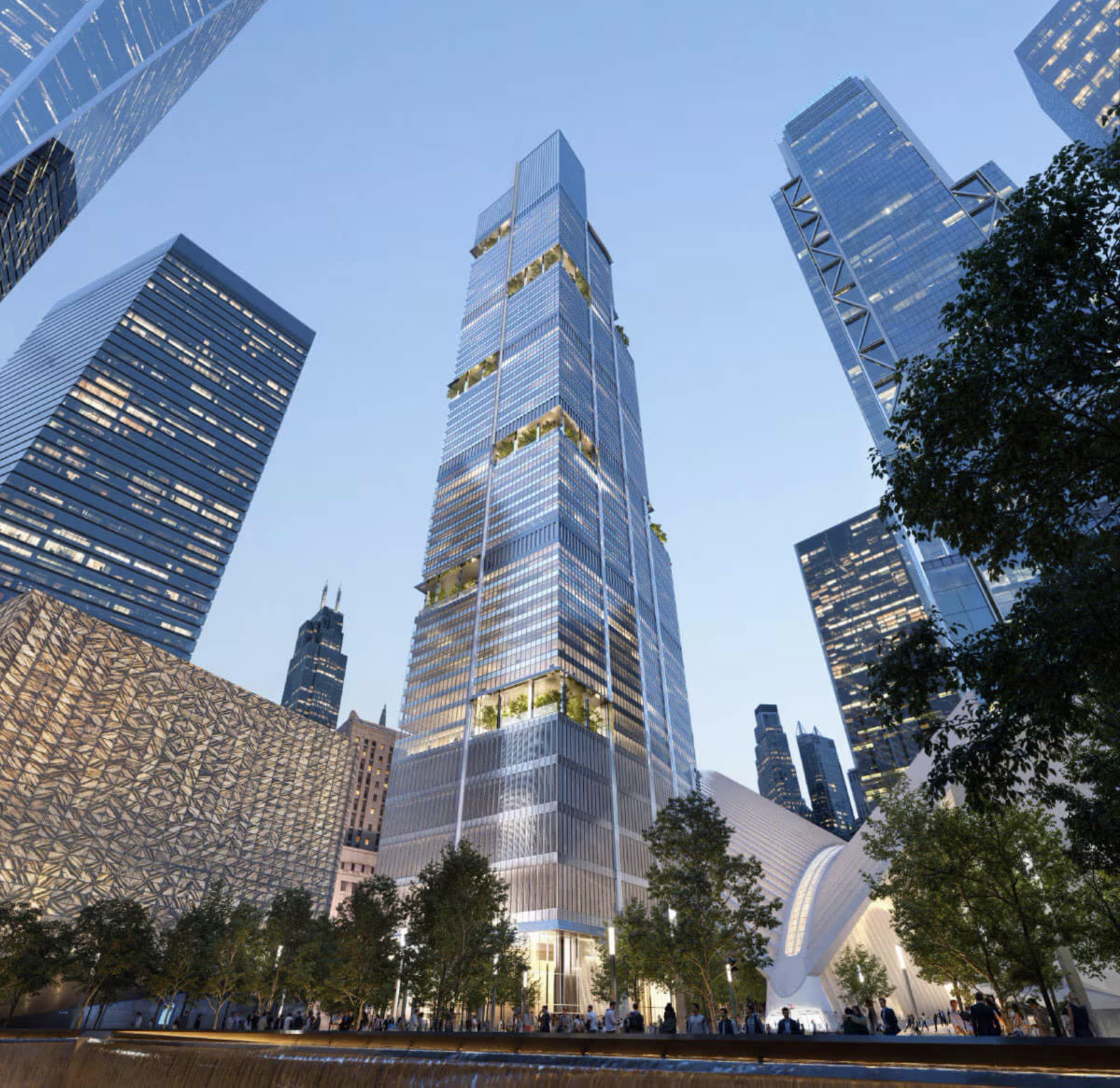
You can go to the link for many more pictures, including of the current buildings and the ongoing construction.
For what it’s worth, my personal opinion is that the new buildings on the site are much better than the old ones. But I lost several friends in the attack, and thinking about that day still fills me with sadness.