Dear Mayor Mamdani, Just Wondering, Are You Planning To Pay Your Own Millionaires' Tax?

Dear Mayor Mamdani, Just Wondering, Are You Planning To Pay Your Own Millionaires' Tax?
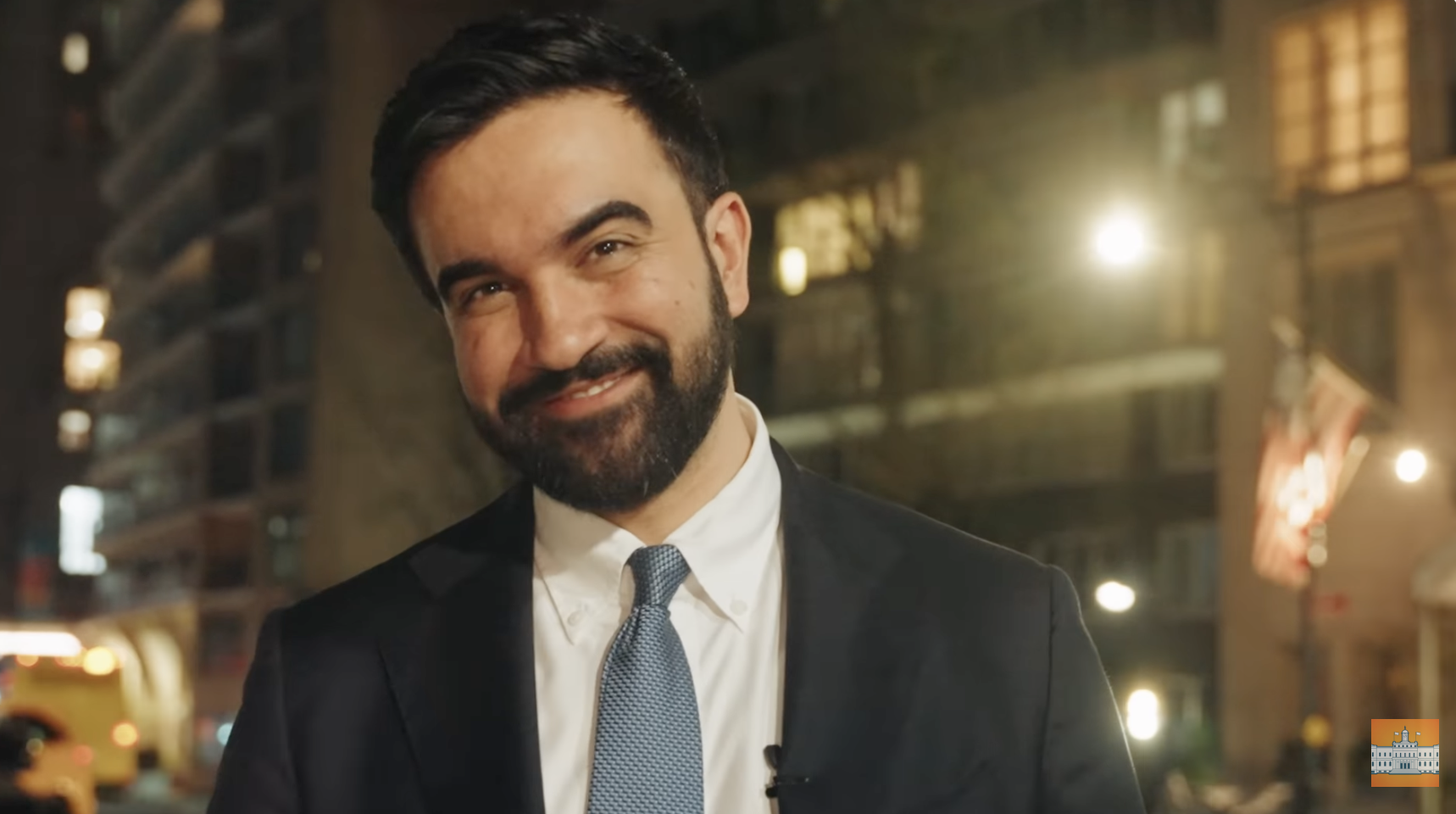
  • Our new socialist Mayor Zohran Mamdani has proposed many destructive initiatives. But if there is one that stands out above all the others as his signature issue, it is his plan to raise income taxes on the “ultra-wealthy,” which he has defined as those people earning $1 million of more per year.

  • The City of New York does not have the authority on its own to raise income tax rates, either at the State or City level, so he has requested that the State Legislature enact his proposed premium taxes on “millionaires.”

  • Here’s what I’m wondering: If the Legislature goes along with Mayor Mamdani’s request, does he plan to pay the new taxes himself?

  • We know the answer to that — of course he doesn’t intend to pay the premium “millionaire” rates. But why not?

Read More

With Zohran Mamdani, Everything That Has Already Failed Is New Again

With Zohran Mamdani, Everything That Has Already Failed Is New Again
  • Our newly-anointed Mayor-elect, Zohran Mamdani, vows that he is a Socialist, and that he intends to implement an explicitly Socialist suite of policies. OK, the guy is only 34 years old. He was born on October 18, 1991, just a couple of months before the final collapse of the Soviet Union on the day after Christmas that year. He lacks the personal experience that we senior citizens have of reading every day for decades of the horrors of life in Brezhnev’s Soviet Union, or Mao’s China. But could a student really learn so little in fancy schools like Bronx Science and Bowdoin College that he could graduate in the 2010s and not know about this history? Shockingly, yes.

  • So the “Socialist” policies advocated by Mamdani are different, more akin to the standard progressive playbook of a greatly expanded handout state financed by higher income taxes on the high earners. Of the various policies that Mamdani has advocated, the three that I think are most significant in their potential impact on the City are: (1) raising income taxes on high earners, (2) having the City as developer build 200,000 new publicly-owned “affordable” housing units, and (3) “defunding” and/or downsizing the police department.

  • To Mamdani and his twenty- and thirty-something acolytes, all this stuff seems so terribly new and fresh and creative. But the funny thing is that all of these policies have been tried before in New York. They were all implemented well before Mamdani was born, and then reversed by the time he was a little kid. In each case the reversal occurred because the policy had abjectly failed.

Read More

Once Again, State Budget Time in New York And Florida

Once Again, State Budget Time in New York And Florida
  • It is gratifying to see a few other commentators starting to notice the dramatic contrasts between New York and Florida in government spending and policy outcomes.

  • You may already be aware of the truly incredible difference in state government spending between New York and Florida.

  • But what you may not be aware of is the shocking lack of measurable benefit that New Yorkers get for all their extra spending.

Read More

It Only Gets Worse For New York In The Competition With Florida

  • It was only a couple of months ago that I had a post contrasting the states of New York and Florida on many different measures of public policy and success (or failure).

  • The two states are roughly equal in population, yet are at opposite ends of the spectrum on major public policy issues, with New York following the high-tax, high-spend, high-regulation model, and Florida the low-tax, low-spend, low-regulation model.

  • It seems like every day things get worse for New York and better for Florida.

Read More

Bill de Blasio Seven Year Report Card As New York City Mayor

  • On January 1, 2021, our progressive true-believer mayor, Bill de Blasio, began his eighth year in office. Since he is limited to two terms under current law, this will be his last year, unless something changes.

  • Now that another crowd of progressive true-believers has just swept to power in Washington, it seems like an appropriate time to look at how the seven years of super-progressive government have served us in New York.

  • Recall that when de Blasio became Mayor in January 2014, he followed 20 years of at least nominally Republican mayors, Rudy Giuliani (1994-2001) and Mike Bloomberg (2002-2013). Those 20 years saw dramatic improvements in New York City’s fortunes, including reductions in crime (the murder rate, for example, fell by over 80%), and resumption of a healthy rate of population increase after previous declines. Would the progressive de Blasio instead bring about some kind of immediate disaster and collapse?

  • For better or worse, that’s not really how it works with bad progressive public policy. Instead of immediate disaster and collapse, what we see is gradual but steady decline, particularly when compared to other jurisdictions that follow policies of, for example, lower taxing and spending and disciplined law enforcement.

  • So on to an overview of de Blasio’s “accomplishments.”

Read More

Thoughts On The Latest Census Data

  • On December 30, the Census Bureau issued its latest population numbers, going up through July 2019. Here is a link to the press release; and here is a link to various charts and graphs of statistics.

  • The long-time official spin on U.S. population changes has been that people are leaving the cold North and East in favor of the warmer South and West. Hey, people like warmer weather!

  • But while there may be something to that, a closer look supports a strong inference that what people really like is lower taxes, even if accompanied by a lower level of government spending and services. In other words, the news is not good for “blue model” governance.

  • Some ten states are estimated to have lost population in the year from July 2018 to July 2019; they are Alaska, Connecticut, Hawaii, Illinois, Louisiana, Mississippi, New Jersey, New York, Vermont and West Virginia. Many of those declines are small, and perhaps based on special circumstances (e.g., the decline of Alaska’s North Slope oil fields).

  • But two states stand out for remarkably large losses. The leader is my own New York, with a loss of about 77,000 residents — 0.39% of population in one year. . . .

Read More