There Is No Understanding The Voters

There Is No Understanding The Voters
  • In general I have faith in the voters to do the right thing, or something relatively close to it. Even though I think that the Democratic Party has gone almost completely nuts, nonetheless in the recent Democratic sweep I think I can see a perspective that sensible voters that might have, and that could have brought about the result, at least as to the congressional races: There was a huge element of Trump fatigue, not necessarily with his policies, but definitely with his demeanor, and his constant pursuit of his own personal interest, from the crypto profiteering, to the pardon free-for-all, to the sale of watches, and much more.

  • Even if these things do not qualify as prosecutable corruption, voters are completely allowed to take them into account when evaluating his presidency. Some congressional push-back might not hurt.

  • But then there were the many state and local races, where there was no direct or obvious Trump connection. Democrats also did extremely well in those, including taking (or maintaining) control of numerous governorships, legislatures, and mayor’s offices. In many of those, I can’t come up with any rational explanation for how the voters chose as they did. Maybe you can.
Read More

"Saving Democracy" By Prosecuting Political Adversaries: A Roundup

"Saving Democracy" By Prosecuting Political Adversaries:  A Roundup
  • Here in the U.S., with few exceptions, we have a commendable tradition that victorious politicians do not use the criminal justice system to prosecute or otherwise disable their rivals and adversaries.

  • At the presidential level, before Trump the two most prominent examples against that tradition were the prosecution of Aaron Burr by Thomas Jefferson in 1807, and the prosecution of Eugene Debs by Woodrow Wilson in 1918. Otherwise, our defeated presidential candidates have gone peacefully to retirement.

  • But then, after Trump was defeated in 2020, that tradition was abrogated in rather spectacular fashion. . . .

  • Notable about all the Trump prosecutions is how completely flimsy were all the charges against him. The idea was rather transparently to use control of levers of government power to disable the main adversary in the political arena. Meanwhile, the people involved sanctimoniously wrapped themselves in a claim that they were “saving our democracy.”

Read More

Energy Affordability: An IQ Test For New Yorkers That They Will Very Likely Fail

  • Here in New York, our very-light-weight Governor Kathy Hochul is running for re-election. To her slight credit, she has noticed that New York is a high cost state, not the least for cost of energy, and that New Yorkers are upset about that.

  • New Yorkers are right to be upset about the cost of energy. According to this chart from the federal EIA containing most recent data for July 2026, the average price of electricity to the ultimate consumer in New York for that month was 29.9¢/kWh, compared to a national average of 18.31¢/kWh; and New York’s cost had increased more than 14% from 26.22¢/kWh in July 2025, versus a 4.9% increase in the national average over last year’s 17.45¢/kWh. New Yorkers are also right to be upset because the premium they pay for electricity is mostly to entirely the consequence of intentional government policies that drive up the cost.

  • What’s crazy is that Governor Hochul has decided to make “energy affordability” a theme of her campaign. The reason that is crazy is that at the same time that Hochul claims she favors more “affordability,” she also brags about maintaining and expanding the very policies that have caused the excess costs.

Read More

How Serious Is The Case For "Corruption" Against President Trump?

A major theme of President Trump’s critics is that he is corrupt. As a couple of examples, here is Elizabeth Warren on July 26 calling Trump “the most corrupt president of the United States any time in American history”; and here is a piece from the Guardian on August 11 calling Trump’s second term “the most openly corrupt” presidency ever. There are hundreds more where those came from.

But is there anything to this? As long time readers here are aware, my view is that politics is inherently corrupt. In this way, politics differs from business, because in business it is completely legitimate to seek to maximize one’s own profit. By contrast, in politics, the officeholder has a duty to exercise policy in the public good, and not for his own benefit or for the benefit of his friends and supporters.

But government policy affects everybody, and it is inevitable that some policies will benefit the officeholder and his friends, or will disadvantage the officeholder’s adversaries. Did the officeholder implement some particular policies entirely for the public good, or in whole or part to enrich himself and his friends? It is impossible to know. And in the real world, every political officeholder will implement policies that can be justified as being in the public good, but in reality also benefit the officeholder himself, or his friends and supporters, disproportionately. Is it corrupt? How would you know?

Read More

What Will The Future Look Like After Louisiana v. Callais?

What Will The Future Look Like After Louisiana v. Callais?
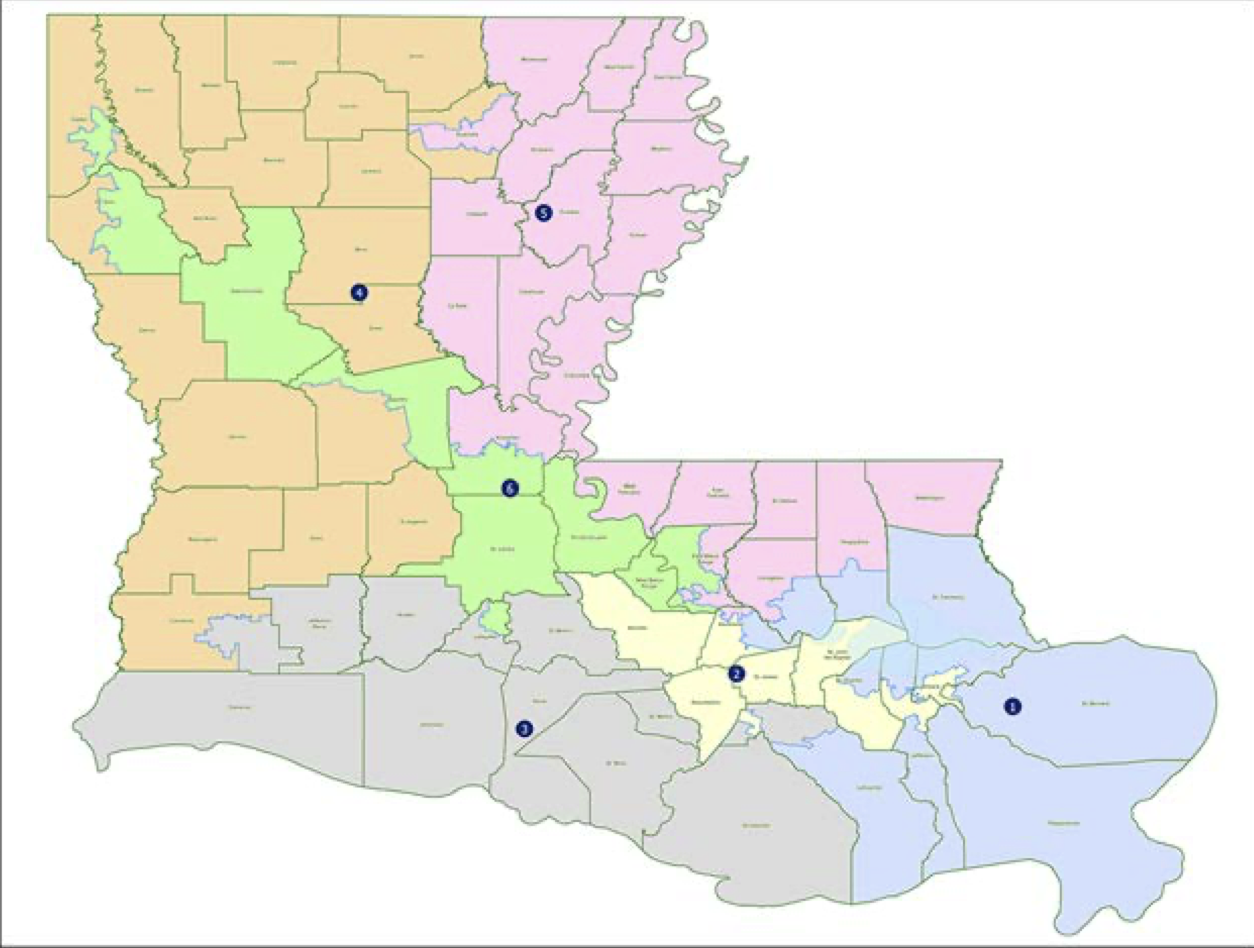
  • On April 29, the Supreme Court decided Louisiana v. Callais. That’s the case where the Court held that the Voting Rights Act did not require Louisiana to create a second “majority-minority” Congressional district because “[t]he Constitution almost never permits a State to discriminate on the basis of race, and such discrimination triggers strict scrutiny.”

  • A “majority-minority” district is one that has been gerrymandered to include sufficient numbers of the designated minority group as to make it nearly certain that a member of that group will be elected to represent the district.

  • The case arose out of the redistricting process following the 2020 census. Louisiana initially came up with a map containing only a single such “majority-minority” district. Plaintiffs who claimed that their voting rights were being infringed challenged the map, and a District Court judge in Louisiana entered a preliminary injunction requiring Louisiana to create a second such district.

  • After the case went into what Justice Alito’s opinion describes as a “legal limbo,” Louisiana then adopted a new map with a second “majority-minority” district; but that map was then promptly challenged by another group of plaintiffs who claimed that their voting rights were being infringed. This second challenge then became the Callais case.

  • The left-wing press has gone into apoplexy over the Callais decision.

Read More

Welfare Fraud In Blue Cities: How Pervasive Is The Kleptocracy?

  • If you keep up with current events at all, it is unlikely that you have missed in the past week the explosion of the Minnesota Somali welfare fraud scandal into the national, and even international, news.

  • Not that the enormous Somali welfare fraud in Minnesota is something new. The bloggers at Powerline, who are based in Minnesota, have been covering the subject since at least 2018. Here is a May 2018 City Journal piece by Scott Johnson (of Powerline), reporting on an investigation of Somali-owned daycare centers in Minneapolis suspected of stealing millions by billing the government for inflated number of enrollees.

  • But things really got going when the pandemic hit in 2020-21. Minnesota became ground zero for Somali fraudsters setting up sites supposedly to feed hungry children, and collecting millions for meals that were never prepared or served. Federal indictments for this fraud — including 47 people charged in the first indictment — began to issue in 2022. Dozens of articles at Powerline have traced the scandal since that time, as the revealed scope of the fraud has gradually gone from the millions to the hundreds of millions, and most recently into the billions of dollars.

Read More