New York Progressive Geniuses Express Their Views On Energy Policy

On my "About" page, I have this to say about the New York progressive's view of appropriate energy policy: [U]sage of energy is a human right, but all actual known methods of producing energy are environmentally unacceptable.  That mentality was on full display in an article in yesterday's New York Times by Lisa Foderaro, headlined "Concerns Over Pipeline Project at Indian Point."     

It seems that a company called Spectra Energy is in the process of expanding and enlarging a pipeline that carries natural gas across the Hudson River about 25 miles north of the New York City line.  That would mean that the pipeline hits the eastern shore of the Hudson right at the site of the Indian Point nuclear power plant -- a facility that itself provides about 25% of the electricity for New York City.  Needless to say, the combination of a greatly increased flow of "fracked" gas from parts west, together with the very existence of a nuclear plant in close proximity to the City (25 miles from the City line makes it about 40 miles from the main business district) has thrown the New York environmental activist community into a tizzy.

[A] construction project — the planned expansion of a natural gas pipeline across Indian Point property — is . . . putting the power plant in a harsh glare. Elected officials, residents and environmental activists have criticized the project, saying that a rupture of the pipeline could unleash a nuclear catastrophe.    

Of course the companies that own the power plant and the pipeline have attempted to allay concerns, such as by moving the pipeline several hundred feet farther from the power plant than the previous version.  But how far do you think those things are going with the activists?

Environmental activists from New York City and Westchester County are not mollified by those precautions. . . .  In recent months, activists have turned up the intensity of their protests against the pipeline expansion. Members of faith organizations and environmental groups held a vigil on Saturday outside the house in Mount Kisco, N.Y., that [Governor] Cuomo shares with his girlfriend, Sandra Lee. . . .  Activists have also held rallies and engaged in acts of civil disobedience. In November, nine people joined hands and blocked a road near a site where some of Spectra Energy’s construction equipment and vehicles were stored in Montrose, a hamlet in the town of Cortlandt, not far from Indian Point.    

So let's have a review of what sources of energy might be available, and which of those are acceptable to the environmental activist community.  First, here is information from the U.S. Energy Information Agency on New York energy consumption by type of fuel in 2013.  In round numbers, hydrocarbons of various sorts accounted for about 75% (natural gas, about 39%; oil and gasoline, about 34%; and coal, about 2%); nuclear was about 13%; hydro (largely Niagara Falls) about 7%; "biomass," about 3.5%; and all other "renewables," about 1.5%.

Hydrocarbons (coal, oil, natural gas)?  No way!  It's not just that the activists are protesting this one pipeline for passing too close to a nuclear plant.  Of course they are against all hydrocarbons always and everywhere because of Global Warming.  It's an endless war of attrition.  Foderero interviews one Patrick Robbins of something called the "Sane Energy Project":

Patrick Robbins, co-director of Sane Energy Project, . . .  contends that continued resistance to the pipeline project, despite the fact that it has the needed approvals, was not fruitless. Indeed, he and others are focused on the larger war against fossil fuels, more than any one battle.  “Every day you stop construction, it hurts their timetable,” he said, referring to Spectra Energy. “And it sends a message to other companies, investors and political officials that the landscape has changed on building these pipelines, and that it’s not going to be an easy fight for them.”

Well, that knocks out about three-quarters of current energy supplies.  Surely, then, nuclear must be OK?  Of course not!  Indeed, the article points out that the activists have gotten Governor Cuomo on board with a demand to deny new licenses to the Indian Point plants and force their closure:

Mr. Cuomo has been vociferous in his demand that federal regulators not relicense Indian Point. (The reactors’ licenses expired in 2013 and 2015, and the Nuclear Regulatory Commission is now considering their renewal.)

We've now declared 88% of our current supply to be unacceptable.  How about the biggest remaining piece, which is hydro (at about 7% of current supply)?  Forget it!  It's not covered in this article, but you should be aware that the New York Times has been in the forefront of the campaign to remove dams from rivers all over the northeast, so that they can return to their "wild" and "natural" state.  Here is an editorial from 2009 celebrating the removal of dams in Maine as a tremendous victory for the environment.  Doesn't that same logic apply to Niagara Falls?

We're down to biomass, wind and solar.  But isn't biomass just another form of burning carbon, except with lots more impurities (and thus real pollution) than refined hydrocarbons?  Besides, I wonder how many of the environmental activists are prepared to reduce their personal energy consumption by 95 to 98%.  None of them, I would wager.


We Lack Any Serious Debate About Economic Policy

One of the many deleterious things about the Trump insurgency has been that it has wiped out of the public debate nearly all serious discussion about basic economic policy.  I'm talking here about the very most fundamental question:  Which is better for improved economic performance and success for a country -- low government spending and low taxes, or high government spending and high taxes?  This simple question defines a fundamental divide between two different approaches to government's role.  The high spending/high taxes side is exemplified by Official Manhattan Contrarian Worst Economics Writer Paul Krugman, and by the two candidates running for President on the Democratic side.  (Here is a recent Krugman column belittling the idea that private economic activity drives economic growth.)  I'm in the other camp.  Obviously, both can't be right; and if one is right, the other is wrong.

I've long thought that if this debate could just be fairly engaged, it would be an easy victory for the side of low government spending and low taxes.  Just compare Argentina and Venezuela to Singapore and Switzerland!  Or, ask why the United States and Canada got rich while Latin America did not.  Or, why high rates of post-war economic growth in Europe got gradually choked off to near zero as government spending rose toward 50% of the economy.  

But today, the side that should be advocating for low spending and low taxes has instead been hijacked into advocacy of an economic program of trade protectionism and immigration restriction.  At least as to protectionism, that could easily be as counterproductive as raising spending and taxes, at least within limits.  Immigration restriction is more debatable -- such restriction would very likely lessen economic growth, but may have positive effects for workers in the lower half of the income distribution, which is not an insignificant point.   But meanwhile, we're completely losing track of by far the most important point, which is that by allowing government spending and taxes to continue to grow, we are placing a huge dead weight on our economic performance and making all Americans poorer.

Perhaps you have been reading Krugman or others of his ilk, and think he might be right that more government spending and higher taxes are a good thing for an economy.  If so, I have created the first Manhattan Contrarian Economic Policy Quiz, which I urge you to take.  There is only one question.  Here it is:

The government has decided to build a new bridge across the Mississippi River.  It solicits bids.  Three contractors submit bids.  The bids are: (1) $1 billion; (2) $1.1 billion; and (3) $1.2 billion.  Which of the following is the correct approach for dealing with these bids?

A. Accept the bid for $1 billion.  It is the low bid.  The government and the taxpayers will save money.  Everybody in the country (other than the people who build the bridge) will be best off by acceptance of the low bid.

B. Accept the bid for $1.2 billion.  It is the high bid.  The economy will be improved because an extra $200 million will be "injected" into the economy.  As the recipients spend the money, the extra $200 million will be distributed around the economy, either because this high bidding company is paying workers more, or hiring more workers, or maybe making more profit.  Under standard GDP accounting principles, the extra $200 million will be recorded dollar-for-dollar as an increase in GDP.  The economy will be bigger!

C. Go back to the high bidder and point out that, while a $1.2 billion bid is good, it would be even better if the bid could be doubled to $2.4 billion.  That way they can pay all the workers twice as much, or reduce their necessary work hours, or some combination of the two.  GDP will be increased by a full $1.4 billion over where it would be if you accept the low bid.

D.  Why stop at $2.4 billion?  Insist on paying at least $10 billion for the bridge.   On second thought, make that $20 billion.  There will be plenty of money to pass around to the contractor and the unions for the laborers, who will then gratefully contribute generously to your re-election campaign.  All of the additional spending will be dutifully recorded by the government accountants as a dollar-for-dollar increase in GDP.  Now you will really notice the jolt!

And now you understand the basics of government "stimulus" spending and Krugmanomics.  You might think that with the enormous thumb-on-the-scale stemming from counting government spending at one hundred cents in GDP, it would be possible for the government to completely mask and hide the obvious detriment to economic performance from wasteful spending.  Venezuela actually accomplished that feat for many years, until its economy more recently started to collapse, even as measured by the government's numbers.  But blowout spending and its companion, over-regulation, take their inevitable toll.  So in the United States, President Obama on entering office immediate raised government spending from about $3 trillion per year to about $4 trillion (aka, "the stimulus"); and from there it has never really gone back down meaningfully.  The result: CNS reports here that the U.S. just had a record 10 straight years without achieving 3% economic growth in any year.  OK, other things have played a role -- ridiculous and pointless over-regulation of the financial sector (Dodd-Frank); the EPA's war on the electric power industry and intentional efforts to drive up the price of electricity; Obamacare; exploding handouts for things like food stamps and SSI; etc.  But again, none of this is getting any attention in the current campaign.


Do Progressives Understand That There Is Some Inconsistency Between The Goals Of Saving The Planet And Fixing Income Inequality?

The two big progressive goals of the moment, as we all know, are "saving the planet" (otherwise known as restricting the emission of CO2 into the atmosphere) and fixing income inequality.  Certainly these are the top two policy priorities of our President, and we all also know that he is really, really smart.  (See yesterday's post.)  But are any progressives, including our President, smart enough to realize that there is a fundamental inconsistency between these two goals?

On Wednesday, MIT put out a press release to publicize a new study by one of its professors, energy economist Christopher Knittel, titled "Will We Ever Stop Using Fossil Fuels?"  As is evident from the press release, Knittel (as well as MIT institutionally) is a serious believer in impending global apocalypse caused by the human sin of using cheap carbon-based energy.  (E.g., "Such scenarios [of using all available fossil fuels] imply difficult-to-imagine change in the planet and dramatic threats to human well-being in many parts of the world.")  Obviously, believes Knittel, human use of fossil fuels must be dramatically reduced or stopped.  But how to get from here to there?

To Knittel, there is only one possible answer: carbon taxes.  And not small in amount.

The problem according to Knittel, is that even though renewables are getting cheaper as technology improves, fossil fuels are getting even cheaper even faster.  (You may or may not view this as a problem, but then you are not a brilliant MIT professor like Knittel.)

At least two technological advances have helped lower fossil fuel prices and expanded reserves: hydraulic fracturing, or fracking, which has unlocked abundant natural gas supplies, and the production of oil from tar sands. . . .  So whereas some energy analysts once thought the apparently limited amount of oil reserves would make the price of oil unfeasibly high at some point, that dynamic seems less likely now.

And thus carbon taxes are "necessary":

Still, the immediate problem of accumulating carbon emissions means some form of carbon tax is necessary, Knittel says — especially given what we now know about declining fossil fuel costs.   

So exactly how much in the way of carbon taxes will be "necessary" to force the shift to renewables and avoid the apocalypse?  Knittel provides some examples of helpful information:

Alternately, look at it this way: Currently battery costs for an electric vehicle are about $325 per kilowatt-hour (KwH). At that cost, Knittel, Greenstone, and Covert calculate, the price of oil would need to exceed $350 per barrel to make an electric vehicle cheaper to operate. But in 2015, the average price of oil was about $49 per barrel.

Whoa!  The current oil price per barrel is about $33.  I guess that means that Prof. Knittel, et al., are telling us that we "need" an oil tax of around, say, $317 per barrel.  That sure makes President Obama's recent suggestion of a per barrel oil tax of $10 look rather paltry!  And I guess if $33 per barrel oil at the well translates into about $1.70 per gallon gasoline at the pump, we'd then be talking about gasoline at around $17 per gallon.  And, undoubtedly, we would also "need" something roughly equivalent to be done to the price of electricity.  Hey, it's to "save the planet."

Now, if you were trying to think of a really, really regressive tax to punish poor and low income people while high income people basically skate, could you actually come up with an example more extreme than this one?  (OK, the lottery may be even worse.  But not by much!)  Andrew Follett at The Daily Caller yesterday, discussing the MIT study, points to this NBER study from 2009, and summarizes its conclusions as follows:

[A] carbon tax would double the tax burden of the poorest households, making it effectively impossible to have both a carbon tax and a living wage. A tax on all man-made greenhouse gas emissions would make the tax burden of the poorest households three times greater than the richest households, according to the study.

But don't worry, when we multiply the price of gasoline and electricity by 10, we'll blame the increase on the evil oil companies.  Income inequality?  That's just a line to stir up jealously and resentment.  We'll pretend to fix that with something guaranteed to have no effect for at least the next 20 years, like expanded pre-K education, while imposing the super-regressive multi-trillion-dollar carbon tax today.  To a really, really smart progressive, it all seems to make perfect sense. 


The Difference Between Being Smart And Being Dumb

EXTRAORDINARY, SOPHISTICATED AND NUANCED INTELLIGENCE

EXTRAORDINARY, SOPHISTICATED AND NUANCED INTELLIGENCE

DUMB YOKEL

DUMB YOKEL

Really, it's a great thing about the internet that you can quickly go back and find a definitive record of what people have said in the past.  And using this facility, we can get a handle on the significant difference between the really, really smart people and the rest of us ordinary nobodies, hicks and yokels.

Take Barack Obama.  Obviously, he's really, really smart.  Indeed, he's so smart that he's bored by having to deal with all the lesser lights around him.  The famous recognition of his greatness is from his right-hand-woman and close aide Valerie Jarrett, quoted in the David Remnick biography:

“I think Barack knew that he had God-given talents that were extraordinary. He knows exactly how smart he is. … He knows how perceptive he is. He knows what a good reader of people he is. And he knows that he has the ability — the extraordinary, uncanny ability — to take a thousand different perspectives, digest them and make sense out of them, and I think that he has never really been challenged intellectually. … So what I sensed in him was not just a restless spirit but somebody with such extraordinary talents that had to be really taxed in order for him to be happy. … He’s been bored to death his whole life. He’s just too talented to do what ordinary people do.”

You may remember 2012 as the year with the then-highest gasoline prices on record.  According to this report from the AAA, gas prices averaged $3.60 nationwide for the full year, and earlier in the year were closer to $4.  And Barack Obama was running for re-election.  On February 23 of that year, he gave a speech at the University of Miami that covered the subject of high energy prices.  You'll enjoy some of these excerpts:

You know there are no quick fixes to this problem [of high gas prices].  You know we can’t just drill our way to lower gas prices. . . .  So what does this mean for us?  It means that anybody who tells you that we can drill our way out of this problem doesn’t know what they’re talking about, or just isn’t telling you the truth.

And then there are those really, really stupid Republicans:

You can bet that since it’s an election year, [the Republicans are] already dusting off their 3-point plan for $2 gas.  And I’ll save you the suspense.  Step one is to drill and step two is to drill. And then step three is to keep drilling.  (Laughter.)  We heard the same line in 2007 when I was running for President.  We hear the same thing every year.  We’ve heard the same thing for 30 years.  Well, the American people aren’t stupid.  They know that’s not a plan. . . .

Because Obama is not stupid at all, and indeed is really, really smart, he was completely confident that the right strategy to lower energy prices was to move away from hydrocarbons and replace them with things like solar and wind:

The potential of a sustained, all-of-the-above energy strategy is all around us.  Here in Miami, 2008, Miami became the first major American city to power its city hall entirely with solar and renewable energy.  Right here in Miami.  (Applause.) . . . . On a typical day, the wind turbine at the Miami-Dade Museum can meet about 10 percent of the energy needs in a South Florida home, and the largest wind producer in the country is over at Juno Beach.

According to the AAA here, the nationwide average price of regular gasoline today is $1.715 -- actually well below the $2 goal that Obama was talking about in February 2012.  And how did we get there?  One and only one way:  drilling.  Anybody who thinks that solar or wind or some other kind of renewable had anything to do with it is completely delusional.

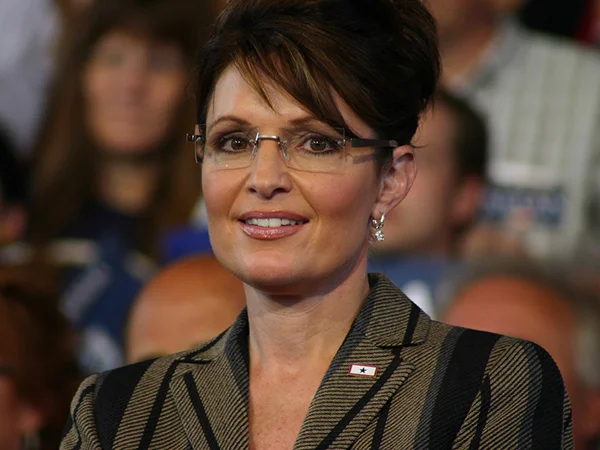
Then there was Sarah Palin.  The famous quote from her is "Drill, baby, drill," actually uttered at multiple places and on multiple occasions.  Here's an example from 2010.  Dumb yokel!

Remember that socialism means putting all the important economic decisions in the hands of the really, really smart people.

Is It Possible For A Rational Person To Support Hillary?

I know you are thinking that it is not possible, but remember that it is becoming increasingly likely that Hillary's general election opponent will be Donald Trump.  David Harsanyi at The Federalist has put together what might be called the thinking person's reasons to support Hillary over Trump in the general election.  The title is "Why President Trump Would Be A Bigger Disaster Than Hillary."  OK, it's a rather low bar.  See what you think.

The main idea is that Hillary is so grating and annoying that she will make everybody hate her and thereby enhance the prospects for conservative principles to advance over a longer term.

Hillary, as you may have noticed, does not have the charisma of Barack Obama. Not only will she be divisive and ethically compromised, but Hillary will also galvanize the Right. Her presidency — even more now that she’s dropped the pretense of centrism — would reinforce the traditional ideological distinctions we’ve debated for years. Republicans would almost certainly unite against her agenda, which will be little more than codifying Obama’s legacy — a collection of policies that half the country still hates.  She won’t be able to pass anything substantive.      

But couldn't Trump accomplish at least something useful?  Harsanyi doubts it; and, frankly, so do I.  Excerpt:

[In a Trump presidency,] the temptation in Congress to follow Trumpism — a philosophy based on the vagaries of one man — will be strong. Trump’s inclination is never to free Americans from the state (“we’re gonna take care of everybody!”) but rather to do a better job administering the state through great deals and assertive leadership. Or, everything the Founders didn’t want the presidency to be.     

Unfortunately the promise of Trump is not that he will rein in the overreaching state for the benefit of everyone, but rather that he will turn the tables so that now the state will be used by us against them.

There is little question Trump would abuse power. In some way, it’s the point of his candidacy. The thing that gets his admirers excited. “Finally, someone who will use the IRS for us. Someone who will circumvent Congress for us. Obama gets everything; why shouldn’t we?”

It's not a prescription for long-term success in a closely divided country.  Sooner or later, the other side will be back in control, and will take revenge.

And finally, there's the question of whether Trumpism will actually be to the benefit of what appears to be his core constituency, namely the angry and largely blue-collar voter.

There’s a difference between caring about the plight of working stiffs and embracing isolationism, high tariffs, and other policies that would destroy their long-term prospects. Is everyone supposed to surrender to mercantilism because it makes 30 percent of angry voters feel better?

None of these are bad points.  But Harsanyi is definitely being a bit of a contrarian just for the purpose of generating some controversy and discussion.  (OK, I might do a little of that from time to time myself.)  Just a few counter-points to consider:

  • The one area of policy where Trump has actually proposed a plan in some detail is the income tax, where his plan (if adopted -- a big if) would simplify things and shrink collections significantly.  He also has no particular loyalties to the bureaucracy, and rails against the debt.  Isn't there at least some chance that he would try to push at least a little to shrink the government or, perhaps, grow it more slowly?
  • Trump is on to the fact that climate alarmism is a scam.
  • How will a President Trump react to the poverty scam, that is, the fact that governments spend about $1 trillion per year (federal share, about $700 billion) to fight poverty without ever reducing poverty in the slightest?  I would have at least some hope that he would direct some attention in this direction.  And clearly Hillary would not -- her loyalties are to the bureaucrats and interest groups that are on the receiving end of all that government largesse.  Of course, so far in his campaign Trump has not expressed any interest in these issues.  GW Bush never turned any attention to these issues either, although one may say that he was pre-occupied with foreign policy.
  • Any Hillary nomination to the Supreme Court would be a disaster.  Would Republicans be willing to leave Supreme Court vacancies open for years?  With Trump, there's at least a little hope; although I'm not sure at this point that he even understands what the issues are with Supreme Court appointments.


Don't Worry, Raising The Minimum Wage Just Passes Out Free Money With No Downside

The minimum wage is one of those public policy questions where the two contrasting ways of looking at the world stand in all their irreconcilable glory.  On one side, progressives have gotten up a huge head of steam lately for their proposals to more-than-double the current federal minimum wage to $15.  Bernie Sanders is a leading proponent.  See also San Francisco, Seattle, and of course my own home town of New York (the "Fight for 15!").  (Hillary Clinton advocated a minimum wage of $12 at one of the debates back in November, although it's not clear why if $12 is good $15 wouldn't be better.  Is there some magic crystal ball that tells you when you have crossed an invisible line and an increase suddenly stops being beneficial and starts harming the intended beneficiaries?  Hey, how about $100?)  Whether $12 or $15, the idea is that it's basically free money, much of it going to the poor or less-well-off, with no downside.  Over on the other side of the ideological spectrum, conservative pundits and think tanks see a huge downside for young and low-skill workers getting priced out of their first toe-hold in the job market.  The progressives accuse these writers of merely providing cover for rich people and business interests trying to hold down their wage costs on the backs of the poor.

The end result is that the two sides come up with exactly opposite policy prescriptions and promote their own vision as the best way to help poor and low income people.  But both can't be right.  If your goal is that poor and low-income people should have the best possible shot at success in life, then which is it -- raise the minimum wage, or not (or lower it, or eliminate it)?

In January I went to a program on the minimum wage put on by the Manhattan Institute.  The main presenter was a guy named Douglas Holtz-Eakin, an economist who is current head of something called American Action Forum and has a long list of former positions that include director of the CBO and advisor to the McCain campaign.  Here is a link to some of Holtz-Eakin's research on the effects of the minimum wage.  Holtz-Eakin pointed out that increases in the minimum wage lead to wage increases for some but unemployment for others.  However, the large majority of minimum wage workers are in non-poor households (where they are second and third earners), so much of the "benefit" from a minimum wage increase goes to the non-poor, while much of the harm goes to those at the very bottom, particularly those trying to get their first jobs.  You might agree or disagree with Mr. Holtz-Eakin, but it's hard to see him as a shill for business interests trying to save wage costs, as opposed to a serious guy trying to see what would actually work best for the poor.

Is having the minimum wage price you out of the labor market actually a serious problem for anybody?  An editorial in today's New York Times has some data that ought to be rather troubling for the advocates of big minimum wage increases.  Of course, the New York Times itself is one of those advocates; but somehow they don't recognize or mention the significance of the data they cite to that debate.  (Why am I not surprised?)

The title of the Times editorial is "The Crisis of Minority Unemployment."  The principal data on which the editorial relies comes from a recent (January 2016) report from something called the Great Cities Institute of the University of Illinois at Chicago.  The title of the report is "Lost: The Crisis Of Jobless and Out Of School Teens and Young Adults In Chicago, Illinois, and the U.S."   (pdf)  The Times summarizes the most troubling finding of the report as follows:

[The Great Cities Institute report] found that in Los Angeles and New York City about 30 percent of 20- to 24-year-old black men were out of work and out of school in 2014. The situation is even more extreme in Chicago, where nearly half of black men in this age group were neither working nor in school; the rate was 20 percent for Hispanic men and 10 percent for white men in the same age group.   

The data are not broken out for other cities.  But one would have to think that if nearly half of black male 20 to 24-year-olds in Chicago are neither in school nor working, that the numbers would have to be even worse for the even-more-serious basket-case cities like Detroit, Baltimore and St. Louis.

Now, what is the explanation for these huge figures for idleness of young black men, other than that they have been priced out of the labor market by the minimum wage?  There may be some explanations that can explain parts of the phenomenon, but, I would suggest, not the massive numbers revealed in this report.  (Hypotheses could include: (1) some could be engaged in off-the-books and/or illegal money-making activities not reflected in government data; (2) some could be receiving sufficient government benefits that they don't see a need to work even though jobs are available at the current minimum wage and even above, or accepting work could cause their benefits to decrease.)

In any event, we know that the New York Times believes that the correct explanation is that these young people have been priced out of the labor market.  How do we know that?  Because the Times uses this editorial to advocate for a government program to subsidize employers to hire the young people in question:

[T]here are strategies, which Congress has rejected, that could help rescue a generation of young men from failure and oblivion. Among these is the employment subsidy program that was passed as part of the Recovery Act in 2009. It created more than 260,000 temporary jobs for young people and adults. Governors and employers were ecstatic. But Republicans in Congress denounced the program as useless a year later and blocked proposals that would have extended it.  

Oh, those evil Republicans!  But I thought, New York Times, that employers were indifferent to the cost of wages for low-level employees, at least up to the level of $15 per hour.  What am I missing?  It seems that that principle applies only in the absence of an opportunity to create a new government program and employ a bunch more bureaucrats to administer it.

So should we all get behind some kind of government subsidy program so that young black men can get their first jobs at a decent wage even as employers pay little?  Can you see any flaws in this idea?  Let me suggest a couple:  (1) The subsidy becomes an effective additional marginal tax on any wage increases the young men may earn, effectively dragging down their ability to see any return for themselves if they work hard and succeed.  (2) Some group of government-favored and government-connected employers get big checks to have some numbers of young black men working on their premises.  Without doubt they will game it to their benefit.  Certainly, it will be to their advantage to keep these young men working, and at low wages, in order to keep the government checks coming.

There are reasons why $1 trillion of annual government anti-poverty spending never reduces poverty by even a single person.  The purpose of every government program is to continue and grow the program; and that requires that the supposed beneficiaries remain forever in their dependent status.  This program would be no different because it can't be any different.

Sorry, but there is no better option than letting the market set a price for labor at which the market clears.  That may mean that young black men get their first toe-hold at a very low level, but it is by far the best way for them to have the maximum opportunity to get started early, to move up quickly, and to avoid dependency.